

Blog
Long in the turf
Posted: August 19th, 2012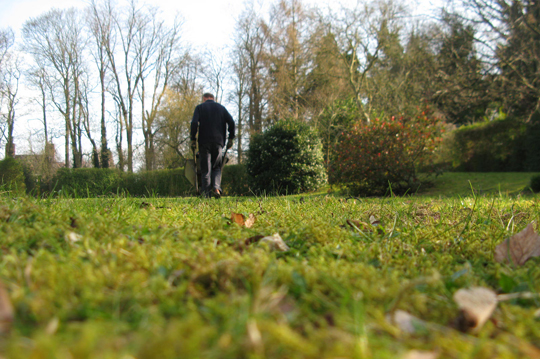
Following in the footsteps of previous conscientious owners, my dad has mown the garden lawn into clean green strips for many a year now. The Saturday morning whirr of the ‘sit on’ lawn mower and satisfied placement of his sun bleached cricket hat on the kitchen table are a sign of normality at home. A smart, fresh carpet of straight lines makes a pleasing contrast to the over-flowing cottage style borders, and bold trimmed hedges that contain the garden.
Over the years, however, the lawn has started to misbehave. Moss has wiggled its way in through the blades of grass creating swaths of wet sponge in the shadows of trees. Creeping perennials have niggled and fumbled their way across the strips, while the determined rosettes of the dandelions puncture, nudge and multiply. Even the dark green circles of fungus sprouting fairy rings have started to appear, much to the despair of the lawn keeper.
As you can imagine, the recommended raking of moss, spiking of the lawn, and sprinkling of seed and fertiliser over a sizeable area takes its toll, and the first attempt is enough to put anyone off the perfect lawn, let alone a man with golf on his mind. So the maintenance regime has remained the same; cutting the grass, removing the clippings, and raking up any leaves that fall.
While this spells disaster for a fine garden lawn, it is just what is needed for a natural chalk flowering grassland. The removal of the cuttings continually decreases the nutrients available to the grass, opening up gaps in the lawn for the flowering species to set root.
The lawn has started to produce masses of tiny flowers, creating a tapestry of colour. Pink stained daisies and purple violets, tiny blue stars, tiny white stars, buttercups, clover; the list seems endless and the majority are new to me. There is also an array of fine foliage. If you look closely there is hardly a blade of grass; the green made up of tiny fern like straps, winding stems with whirls of leaves, moss with long fronds, moss with short fronds, other moss that probably isn’t moss. Until recently, the sight of the flowers has signalled a Saturday morning chop; however this year I suggested to Dad that we see what happened if the grass was allowed to stretch its stems and flower properly. He steered the lawnmower around the best flowering areas of lawn, creating beautiful swaths of potential meadow.
We have watched these areas grow and change over the last few months and have seen an astonishing variety of grasses and flowers. The species have always managed to coordinate with each other and produce beautiful patterns, which have changed gradually throughout the season. Yellow buttercups have peppered and brightened stretches of purple blue. The orange of hawksbit knows to show itself off with the lime green of long lush grasses and the white Achillea like dancing through billowing froths of metallic sheened grass heads. Wood anemones, harebells, pink Centaurium and even pyramidal orchids have been hiding in the lawn for years.
The mown paths between the areas of meadow have allowed us to get in amongst the blooms and enjoy the busy buzz of insects, bees and butterflies. Ready-made, low maintenance flower beds. Needless to say the meadow is now a permanent feature of the lawn. It might change location each year to allow for a new fairway, but the surprises and colour it has given, even during this, the rainiest of summers, has been well worth all that mowing.
For more photos of the meadow please have a look on this Flickr page http://www.flickr.com/photos/beccledesign/sets/72157631267870402/with/7871212794/